
The Roast Far from the Fire
The Roast Far from the Fire: Gojek’s Tangible Impact versus the Pitfalls of Digital Education in Indonesia
By
Yayasan Pendidikan Indonesia- Special consultative status in ECOSOC – United Nations since 2013
#ECOSOC #UNESCO #undesa #menteripendidikan #menteriagama
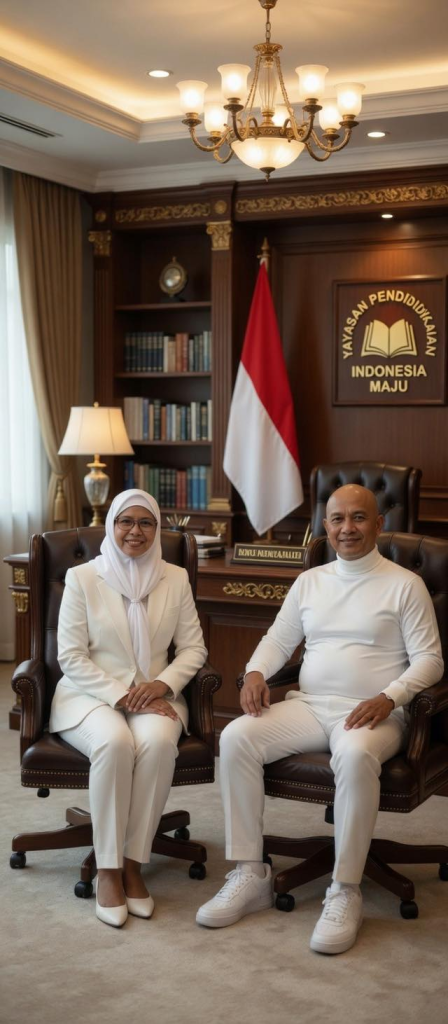
In Indonesian culture, the idiom jauh panggang dari api — “the roast is far from the fire” — poignantly describes situations where promises and reality drift painfully apart. It serves as a fitting metaphor for contrasting two very different journeys: the remarkable success of Gojek, and the troubled implementation of large-scale digital education initiatives in Indonesia.
Gojek began as a simple motorcycle taxi service and evolved into a homegrown super app that delivered immediate, measurable benefits to millions. It created flexible employment opportunities for drivers, empowered small and medium enterprises (UMKM), and provided convenient services to users across the archipelago. Its impact was direct and visible: real income for families, efficiency for daily life, and a multiplier effect on the broader economy. Gojek exemplified how innovation, when grounded in real market needs and strict accountability, can produce genuine public value.
When its founder, Nadiem Makarim, transitioned into public service as Minister of Education, Culture, Research, and Technology, many hoped the same innovative spirit would transform Indonesia’s education sector. Ambitious digitalization programs, notably the procurement of Chromebooks and related digital learning platforms during and after the pandemic, were promoted as game-changers. Billions of rupiah were allocated with the noble promise of equitable access, improved digital literacy, and preparation for a brighter future for Indonesian students.
Yet the results have too often proven jauh panggang dari api. While the rhetoric spoke of revolutionary educational equity, ground-level realities frequently told a different story: uneven infrastructure, inadequate content quality, maintenance challenges, and limited actual learning outcomes, particularly in remote and underprivileged areas. The gap between grand promises and tangible educational improvement has been wide.
Tragically, this disconnect has been compounded by allegations of massive corruption. What began as an effort to expand opportunity through technology has become entangled in procurement scandals involving alleged mark-ups, inflated contracts, and significant state losses. These cases have not only drained public resources but also eroded public trust in educational reform. The very figure once celebrated for creating jobs through private innovation now faces serious legal scrutiny in the public sector, highlighting how good intentions and substantial budgets can be undermined by weak governance.
This contrast offers critical lessons for Indonesia’s education stakeholders. Private-sector innovation like Gojek thrives under market discipline, rapid feedback, and personal accountability. Public education programs, by contrast, operate with large budgets, long-term and abstract goals, and often weaker oversight — conditions that can inadvertently create fertile ground for inefficiency and corruption if transparency mechanisms are insufficient.
Yayasan Pendidikan Indonesia believes that digital tools and technological innovation hold genuine potential to strengthen education. However, realizing this potential requires more than noble vision or generous funding. It demands rigorous transparency, independent oversight, competitive and clean procurement processes, and a relentless focus on measurable learning outcomes rather than merely distributing devices.
Education is the foundation upon which Indonesia’s future rests. We cannot afford for its promised benefits to remain far from the fire. Let the success of Gojek serve not as a point of irony, but as an inspiration: real impact is possible when innovation is paired with integrity and accountability.
It is time for all education stakeholders — government, foundations, schools, and civil society — to close the gap. Only then can Indonesia’s children receive the quality education they deserve, and only then will the roast finally meet the fire